Civil Defense Emergency Hospital/Packaged Disaster Hospital
Information About Civil Defense Emergency Hospitals
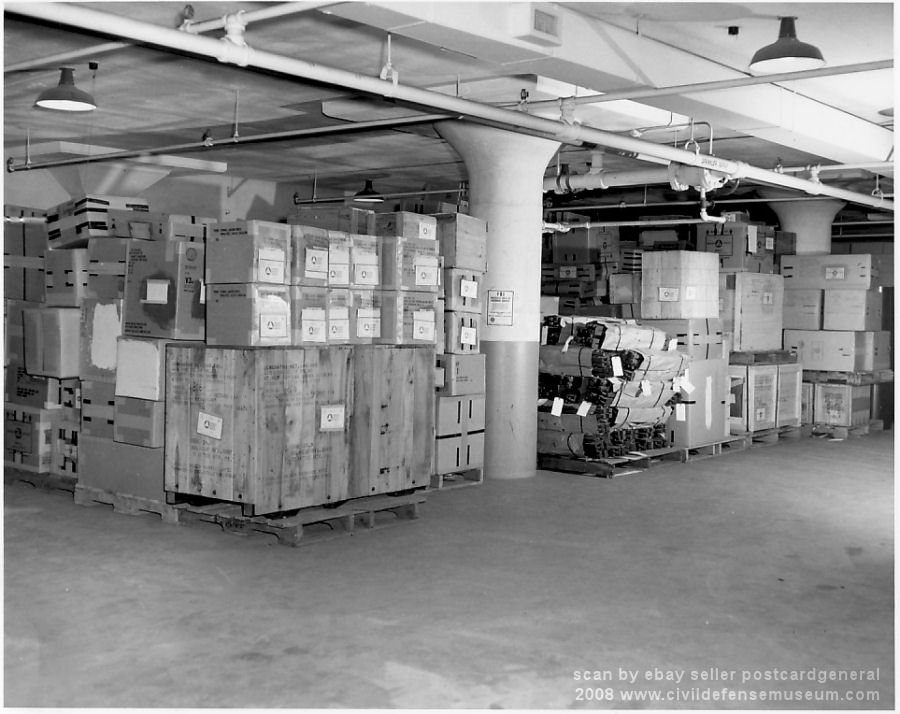
Civil Defense Emergency Hospitals, later renamed Civil Defense Packaged Disaster Hospitals, were 200 bed mobile hospitals based on the military mobile hospitals. The CD hospitals were equipped with supplies for 30 days of operations. Over the years most of these hospitals were abandoned in place like so much of the other Civil Defense items across the country. Here is some info from various CD documents about CD Packaged Disaster Hospitals, some photos of CD hospitals still in storage and photos of the remains of a PDH that I salvaged in McKinney Texas.
CDEH Program Description From 1956 Civil Defense Annual Report. The start of the Civil Defense Emergency Hosptial Program.
In June 1956, FCDA announced a new program for distribution of civil defense
emergency hospitals. The objective is to store these 200-bed hospitals at
strategic points throughout the country in or near facilities which can be
converted to hospital use in an emergency.
The plan is designed for the safe permanent storage of a hospital in unopened orginal containers at or near the place of eventual usage where it can be unpacked and put into operation with a minimum of delay in event of an emergency. Storage sites are to be not closer than 15 miles to a Critical Target Area nor farther than 50 miles from the area to be supported. At least 15,000 square feet of acceptable space must be available for hospital operations. Actual storage space required for the packaged hospital is slightly over 1,800 cubic feet.
The plan is to be implemented through formal agreements with the States. Each State may obtain one or several of these hospitals for storage within its borders by signing an agreement with FCDA under which the State accepts responsibility for adequate custodial, maintenance, and protective care according to established criteria. All aquisition and delivery costs are borne by the Federal Government. Subsequent costs for storage, care, and protection are borne by the State. Title to the property remains with the Federal Government.
CDEH Description From The 1964 DOD OCD Annual Statistical Report
Federal responsibility for various medical and health functions in both
natural and man-made disasters is assigned to Department of Health, Education,
and Welfare, U. S. Public Health Service, (USPHS).
The Division of Health Mobilization, Office of the Surgeon General, provides the program direction and service coordination for such activities. Included is the management of the Civil Defense Medical Stockpile which is designed to augment postattack domestic inventories of medical supplies and equipment essential to survivor medical care and to replace hospital beds which may have been destroyed or rendered unavailable due to radioactive fallout.
The nucleus of the medical stockpile is the Civil Defense Emergency Hospital (CDEH). It is an austere but completely functional 200-bed general hospital designed to be set up within an existing structure such as a school, church, or community center which has been preselected by competent local authorities.
The CDEH has the primary mission of assuring the continuity of essential medical care services at community level during the early postattack phase. The material contained in the CDEH provides a functionally balanced stock directly related to the potential medical care workload which may be experienced within a community during the postattack period. Accordingly, the unit constitutes a valuable resource asset which may be the only reliable source of material for expanding existing hospitals or as replacement for destroyed facilities.
To set up the CDEH requires a floor area of 15,000 square feet which will permit separation of wards, operating rooms and other functional sections; and a suggested staffing complement of 10 physicians, 4 administrators and assistants, 34 professional nurses, 18 practical nurses, 6 anesthetists, 2 pharmacists, 128 medical aides and 124 other personnel, including dentists, laboratory technicians, X-Ray technicians, maintenance engineers, clerks, helpers, messengers, and housekeepers to be drawn from local resources.
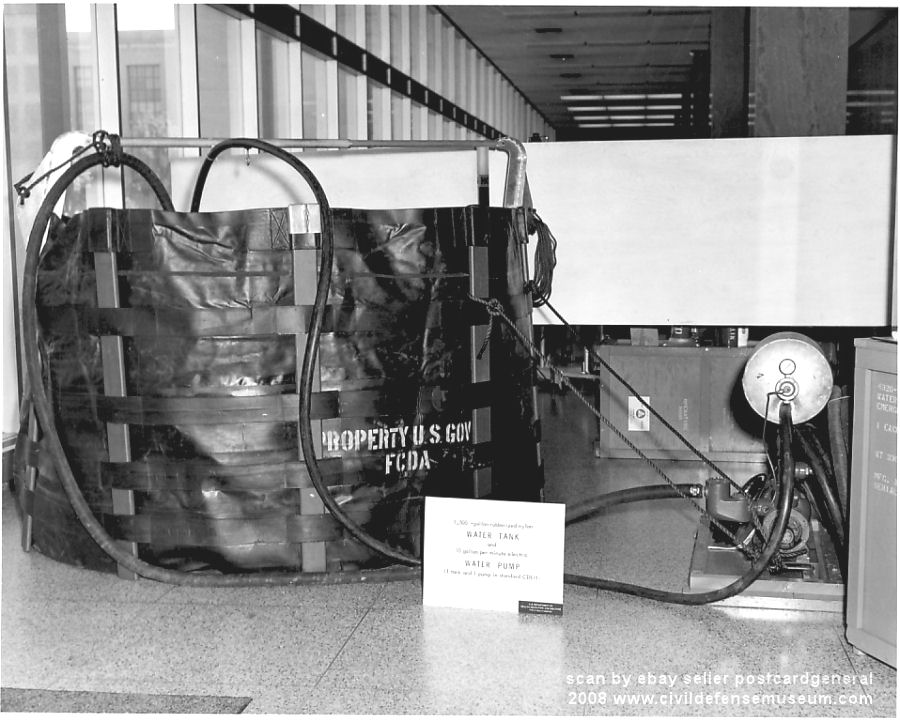
The CDEH contains provisions for the following departments: laboratory; pharmacy; X-Ray; operating rooms, including multiple operating suites; wards, admitting and sorting, and central supply. Auxiliary equipment included is a limited supply of medical and administrative records, a 15 KW generator to provide auxiliary power if local electrical supply is disrupted, and a 1,500 gal lon water tank and pumping unit for emergency water supply.
CDEH's are assigned by Federal-State agreements, based on carefully developed criteria which include such factors as strategic locations, adequacy of storage facility and responsible custodianships.
The CDEH is organized to function independently, or in conjunction with existing hospitals.
Article about the use of U.S. Civil Defense PDHs in Nigeria on the NCBI Web Site.
Here is a link to a very interesting article by Dr. Robert L. Price about the use of some U.S. Civil Defense Packaged Disaster Hospitals that were shipped to Nigeria for use in the aftermath of the civil war there in 1969-1970. Dr. Price evaluates how the CD PDHs worked out in the Nigerian situation. "As it has turned out, the PDH can be used to create a good general hospital."
Link to article on the National Center for Biotechnology Information web site....http://www.ncbi.nlm.nih.gov/pmc/articles/PMC2031744/#reference-sec
Civil Defense PDH Series 10000 Inventory Document File
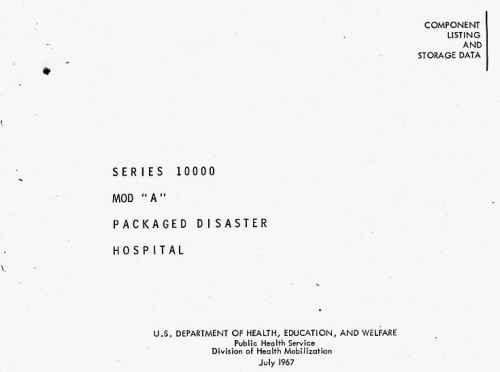
Here is an Adobe PDF file inventory list of, what I believe to be, the final version of the
Packaged Disaster Hospital. The scan quality is pretty good but the document is
scanned sideways. Sorry, I didn't scan it. If you look it over you will see the
inventory is quite extensive.
Series 10000 Mod "A" Packaged Disaster Hospital Component
Listing and Storage Data. File Size 2.6Mb
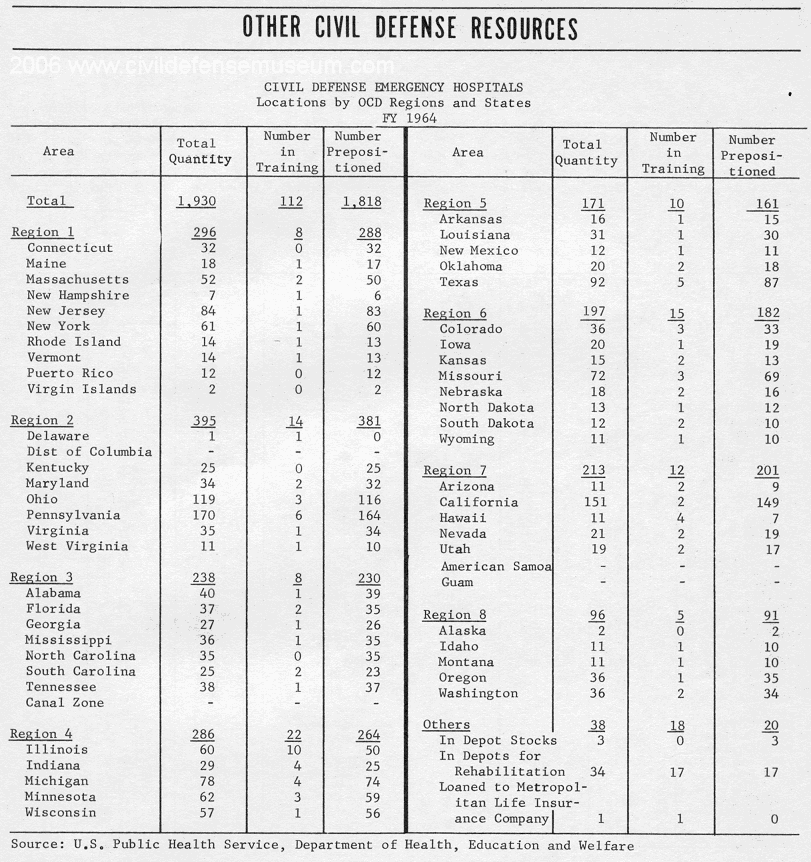
Emergency Hospital Locations by OCD Regions And States 1964
Click to view larger.
This chart is from the DOD OCD 1964 Annual Statistical Report. It show the distribution of the the Emergency Hospitals by Region and State. Note the total number of 1930 Emergency Hospitals at the top of the chart.
Packaged Disaster Training Hospital Display Photos
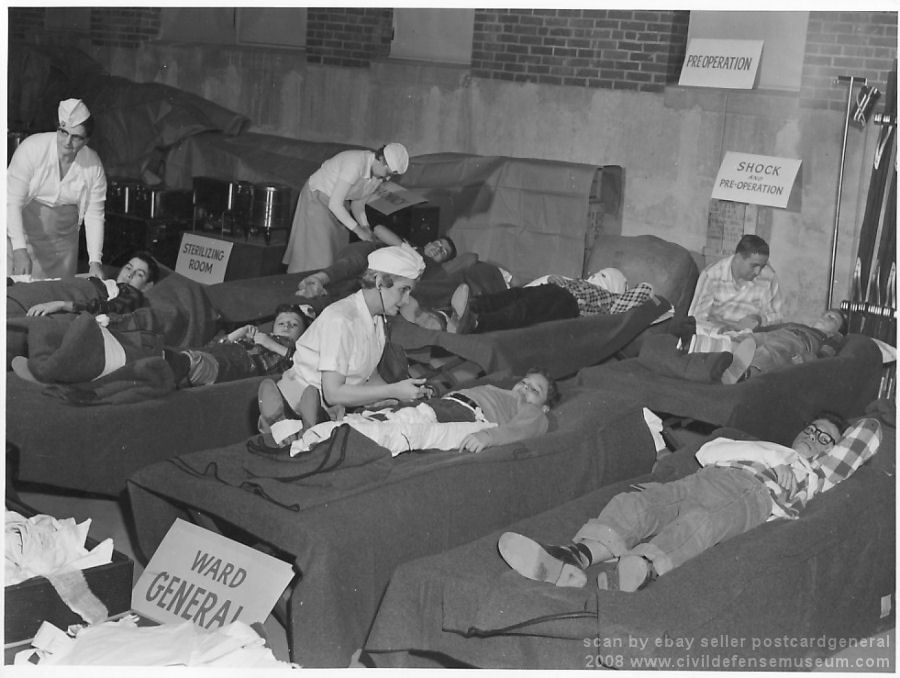
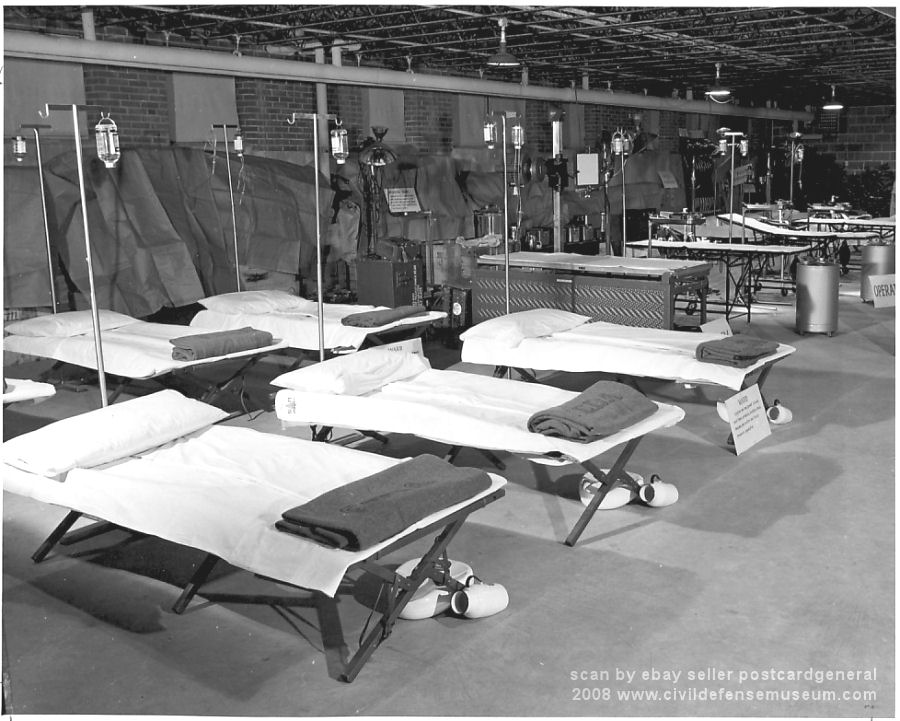
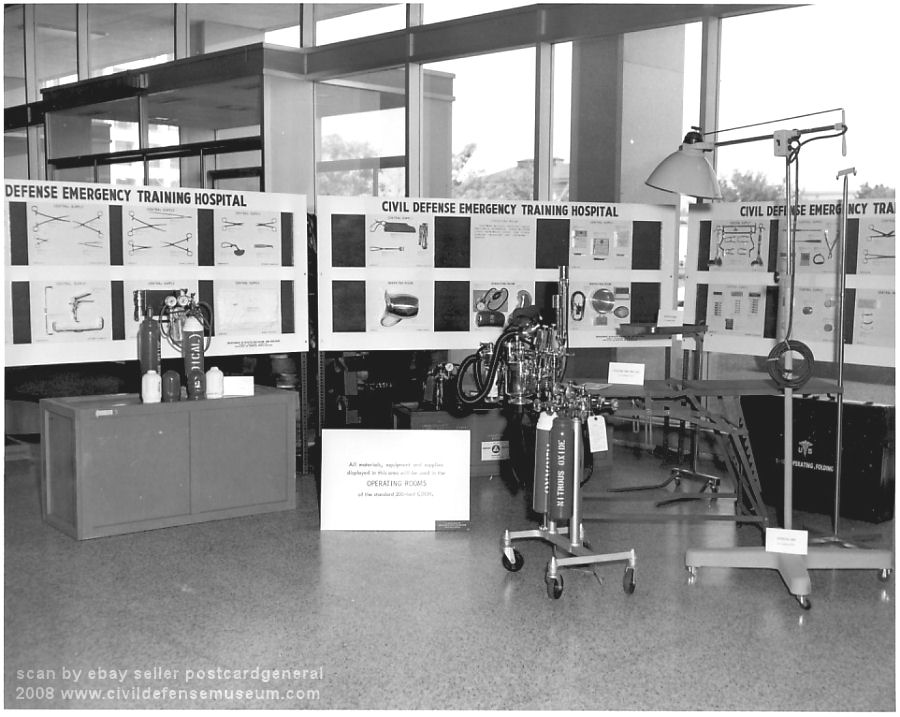
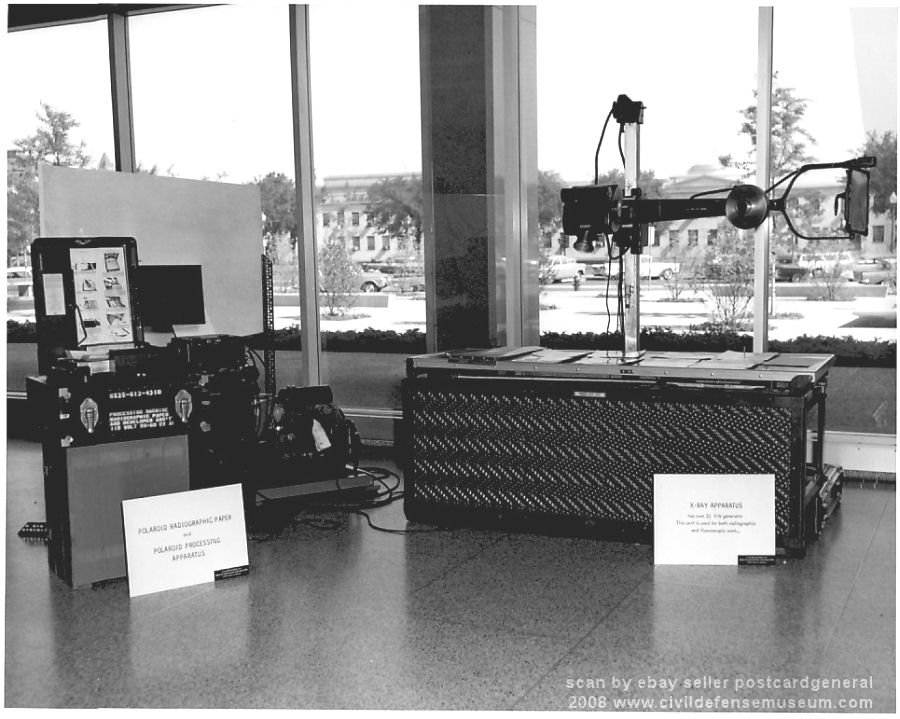
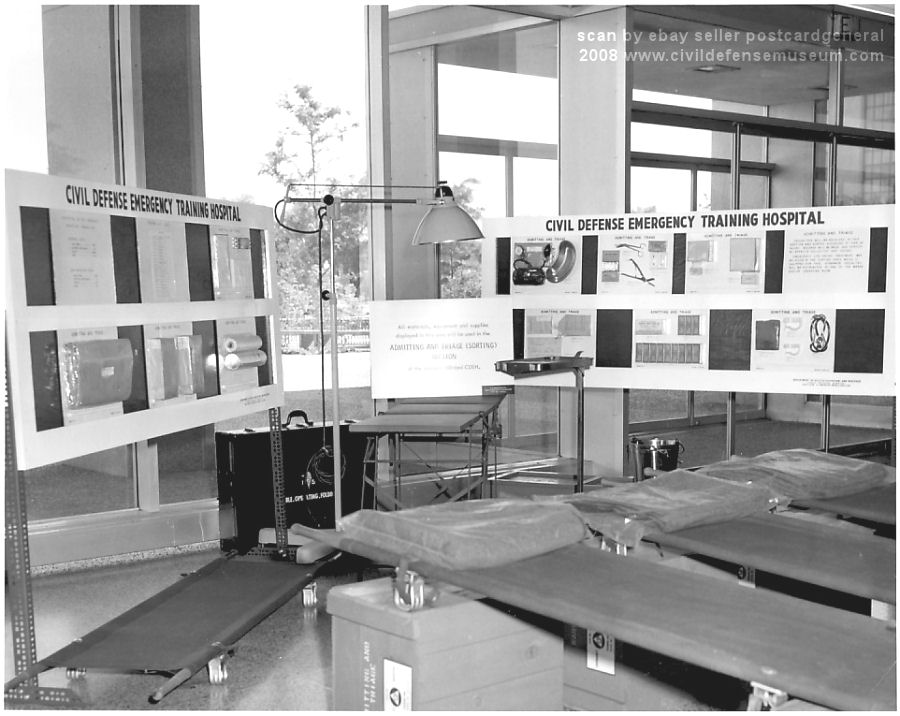
In May of 2008 ebay seller "postcardgeneral" put two sets of packaged disaster hospital photos up for auction on ebay. One photo set was of individual PDH components and the other set was of a PDH display. of I only won one set of photos but the seller had posted good scans of both sets of photos on the auction pages. The photos below so a PDH training hospital display. This is the set of photos that I didn't win. I emailed the seller and asked if I could use their auction scans of the photos on this site and the seller granted me permission to use them. Thank you ebay seller postcardgeneral! The photos are pretty self-explanatory. It would be interesting to find out where these photos were taken. The top two photos appear to have been taken in a different location than the rest of the photos.
|
|

|
|

|
|
|

|
|

|
|

|